Stan sa japanskim detaljima
Tip projekta: Enterijer
Lokacija: Savski venac, Beograd
Godina projektovanja: 2023
Godina izvođenja: 2023
Površina: 59 m²
Fotografija: Relja Ivanić
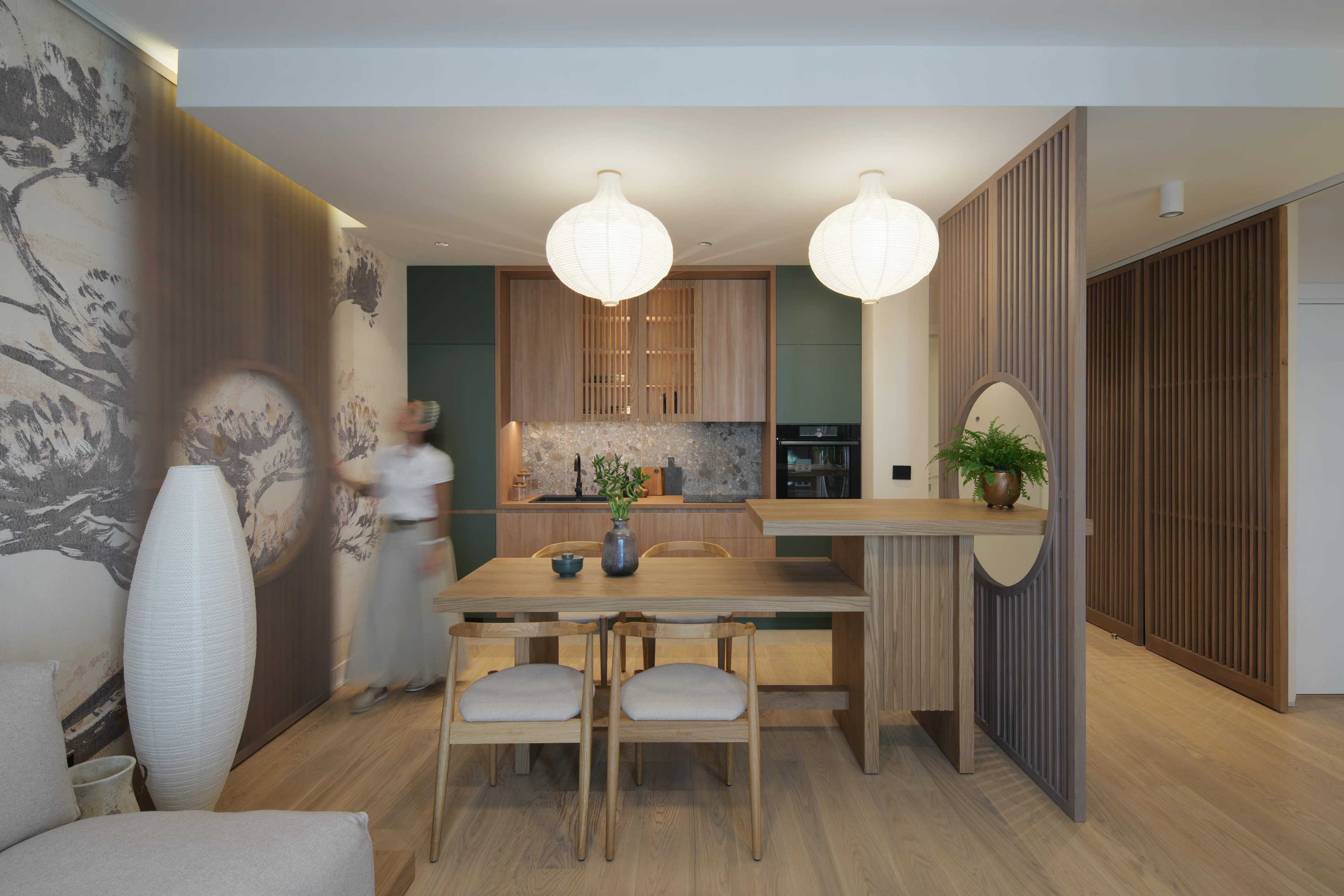
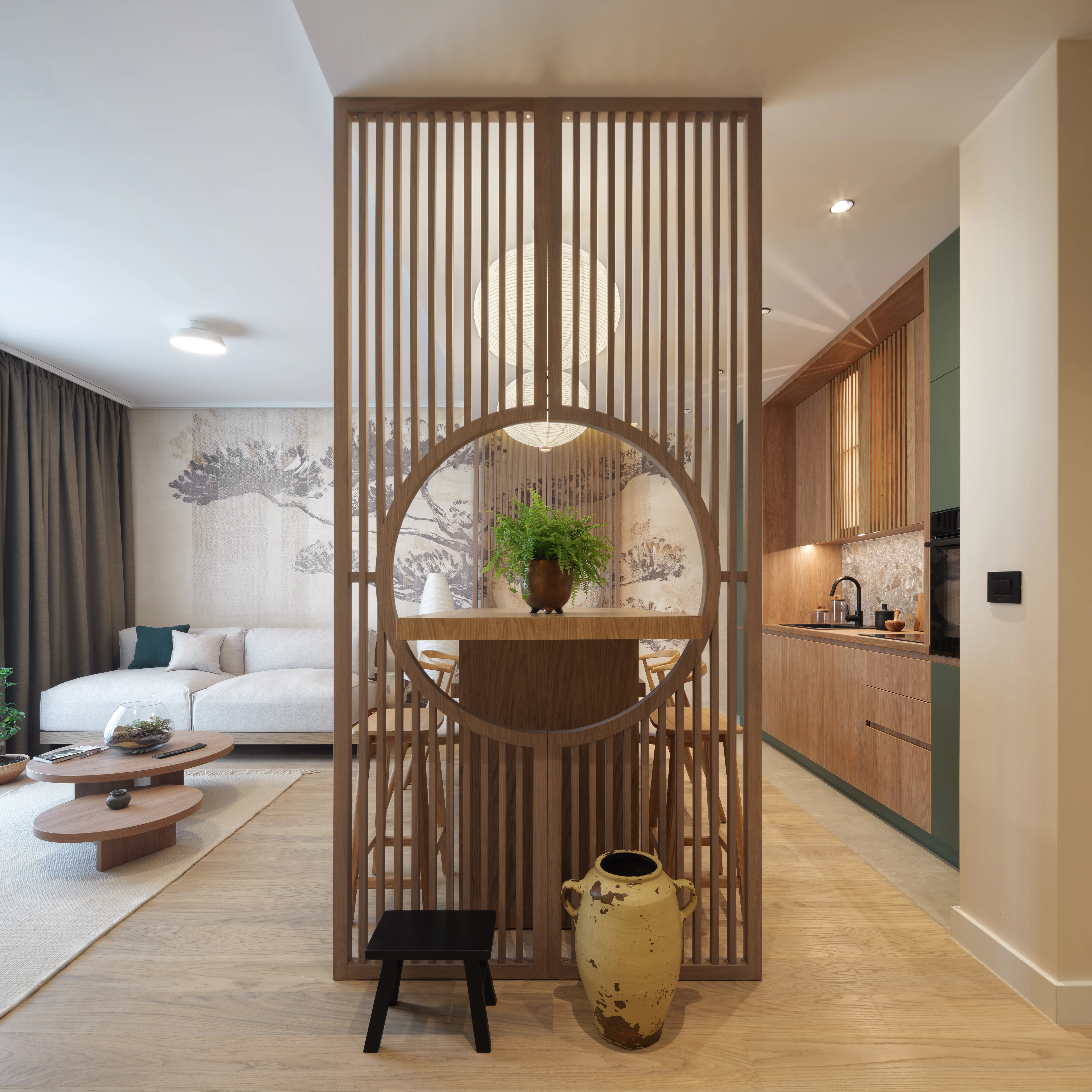
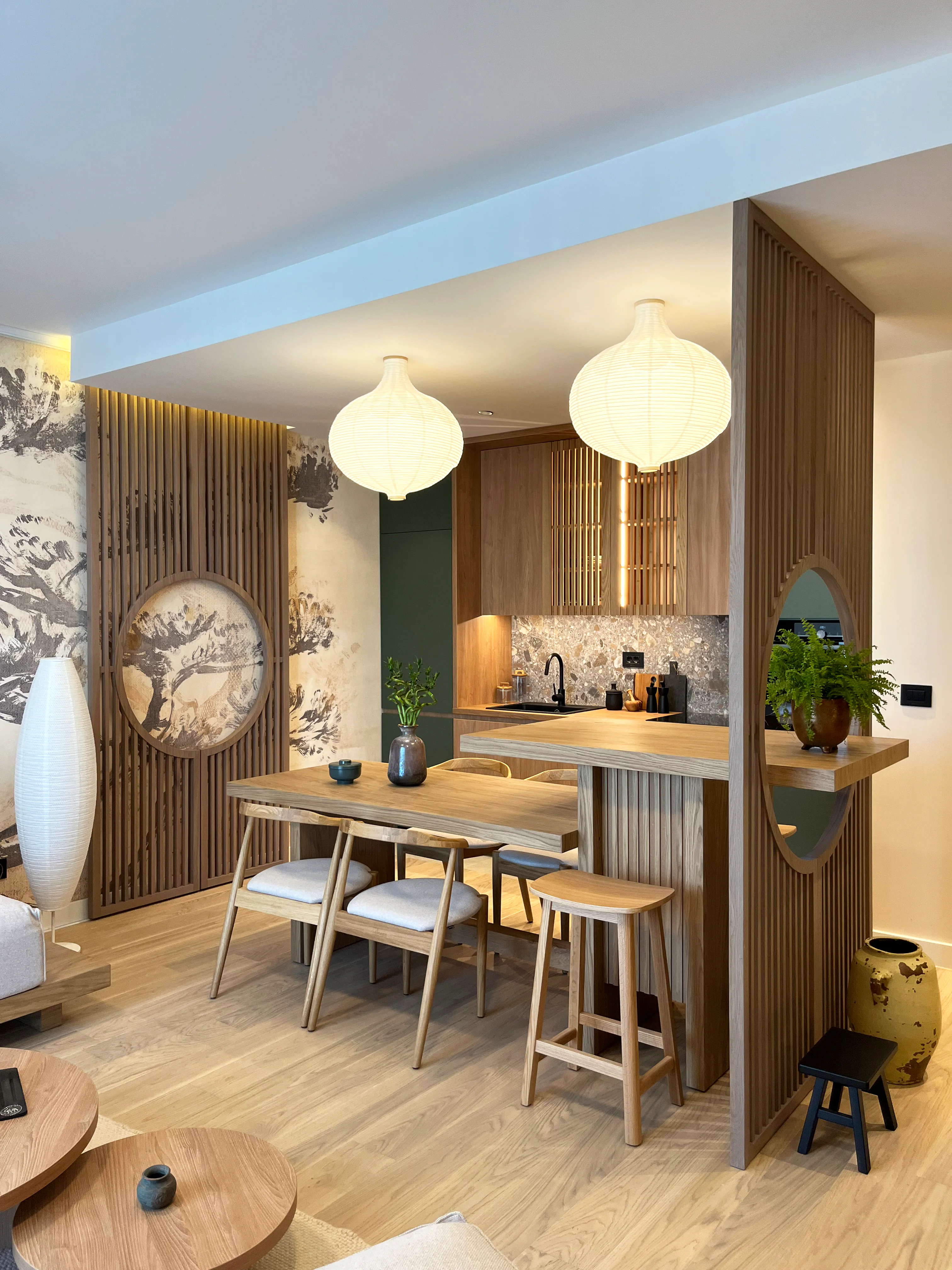
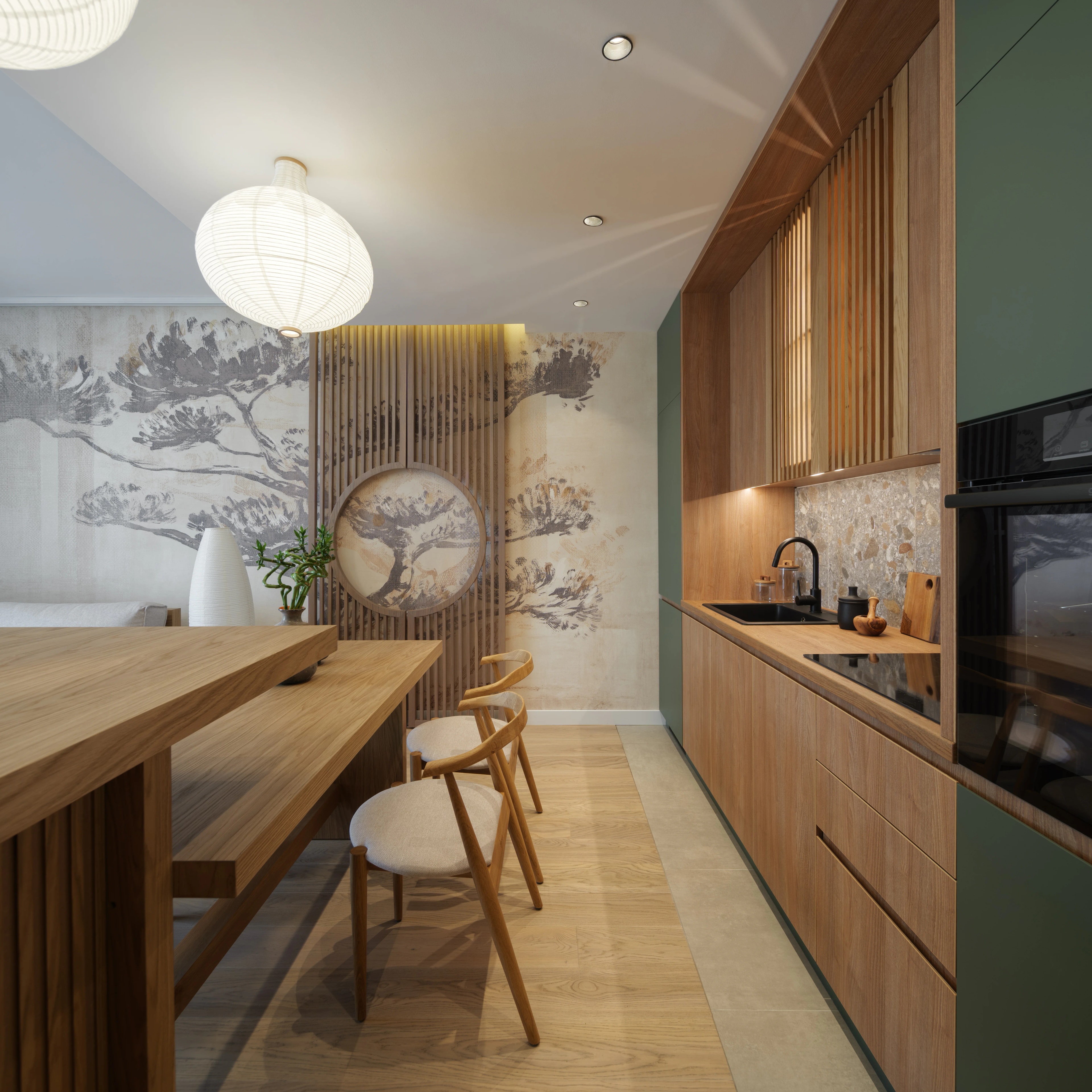
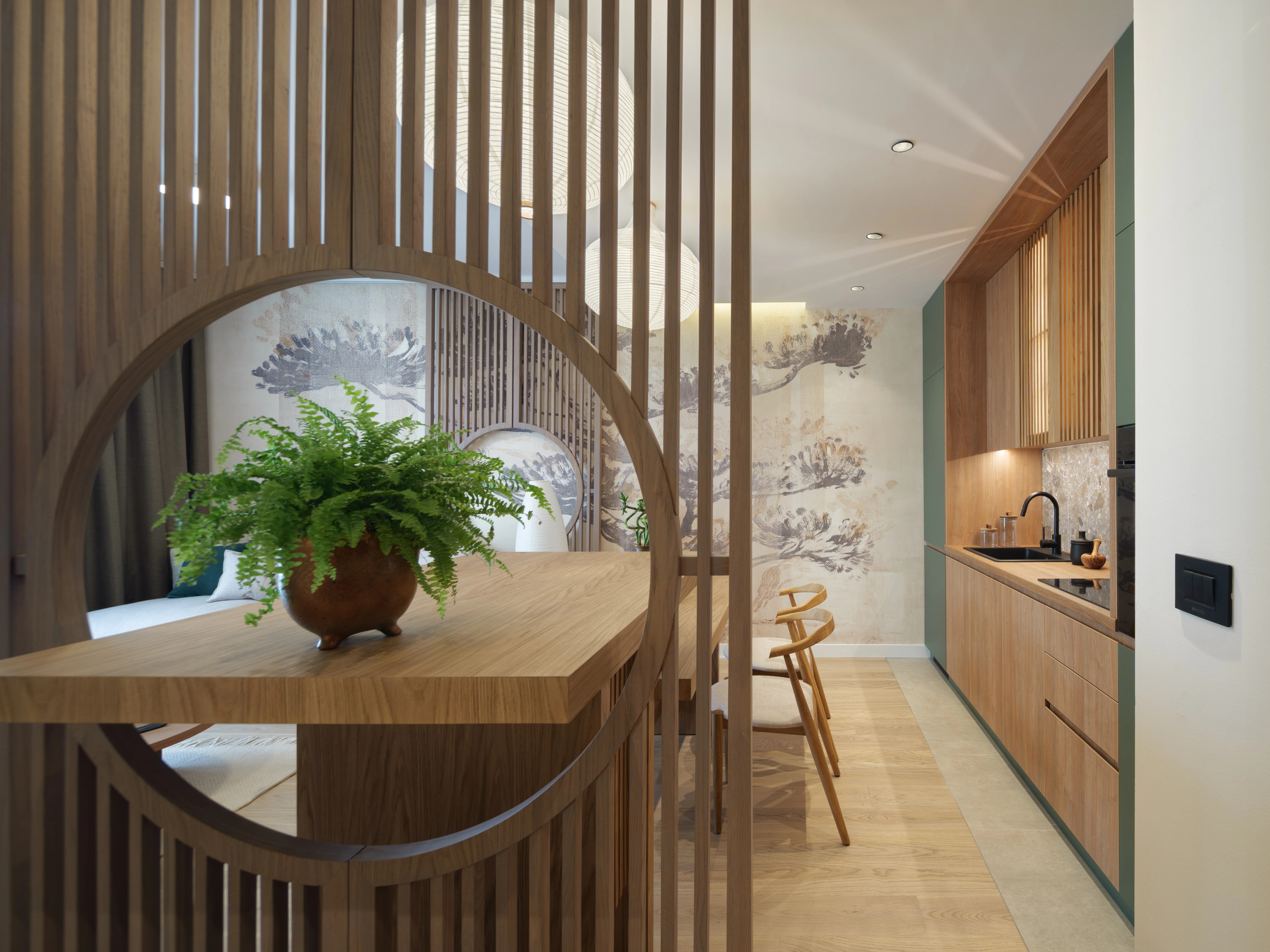
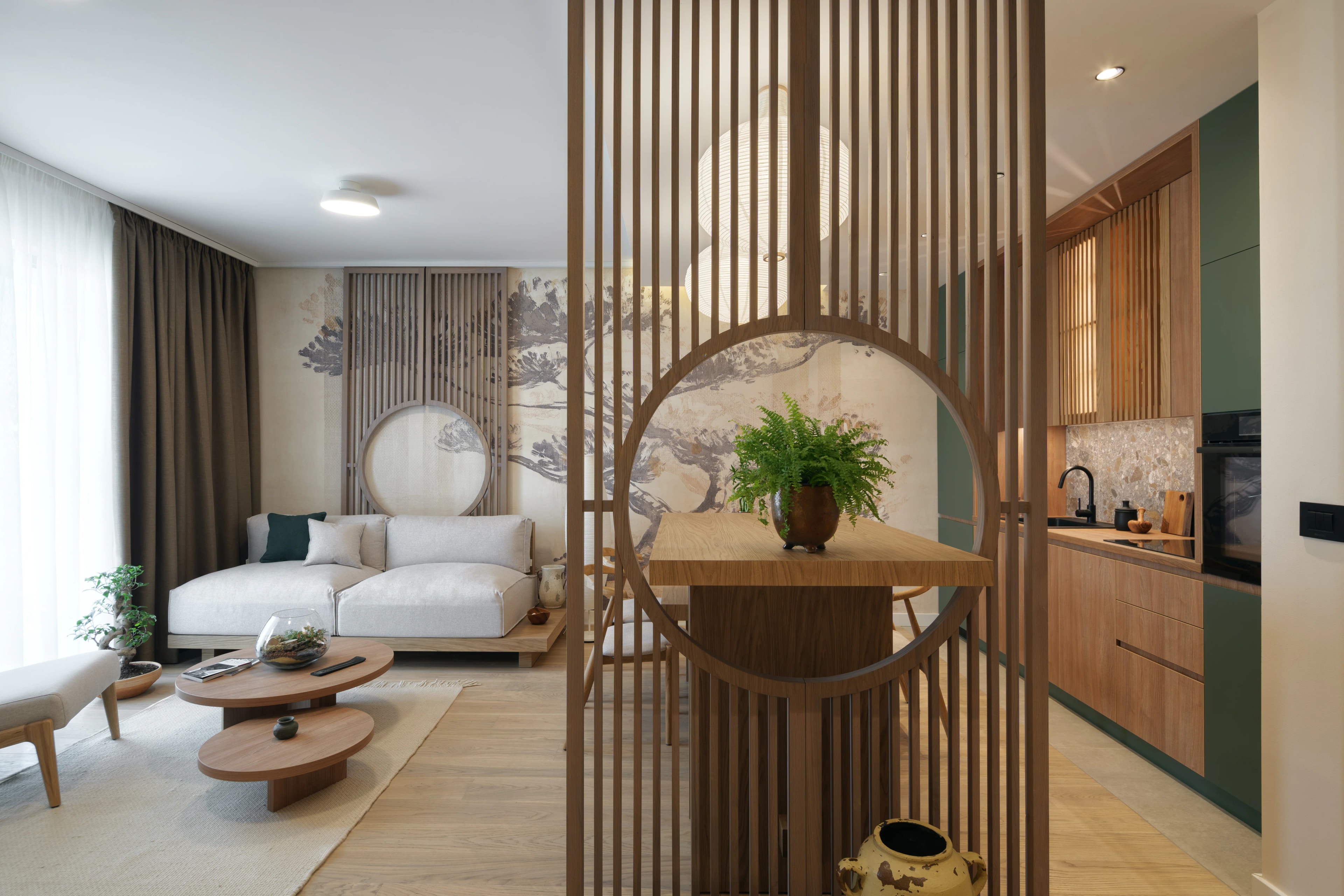
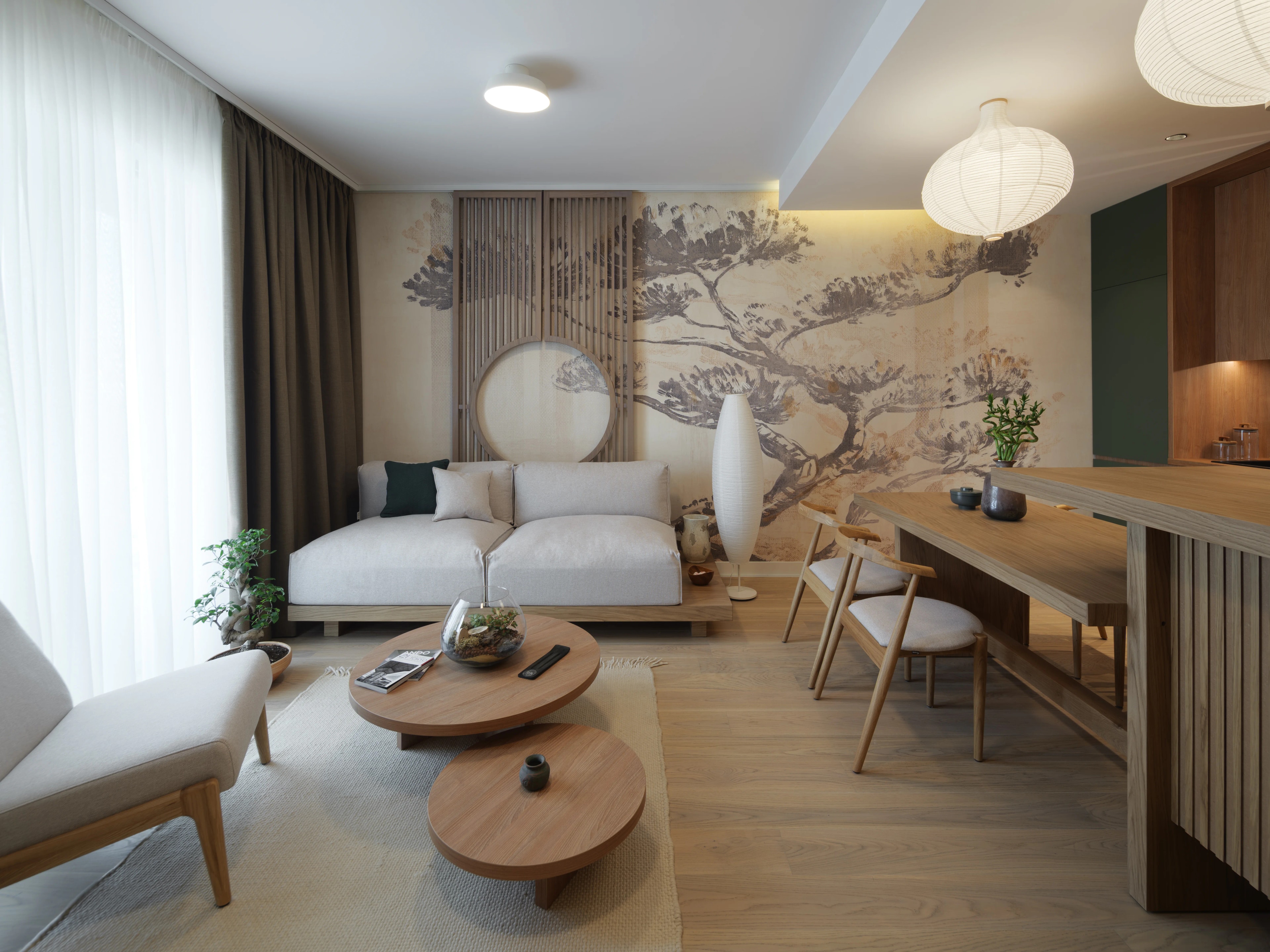
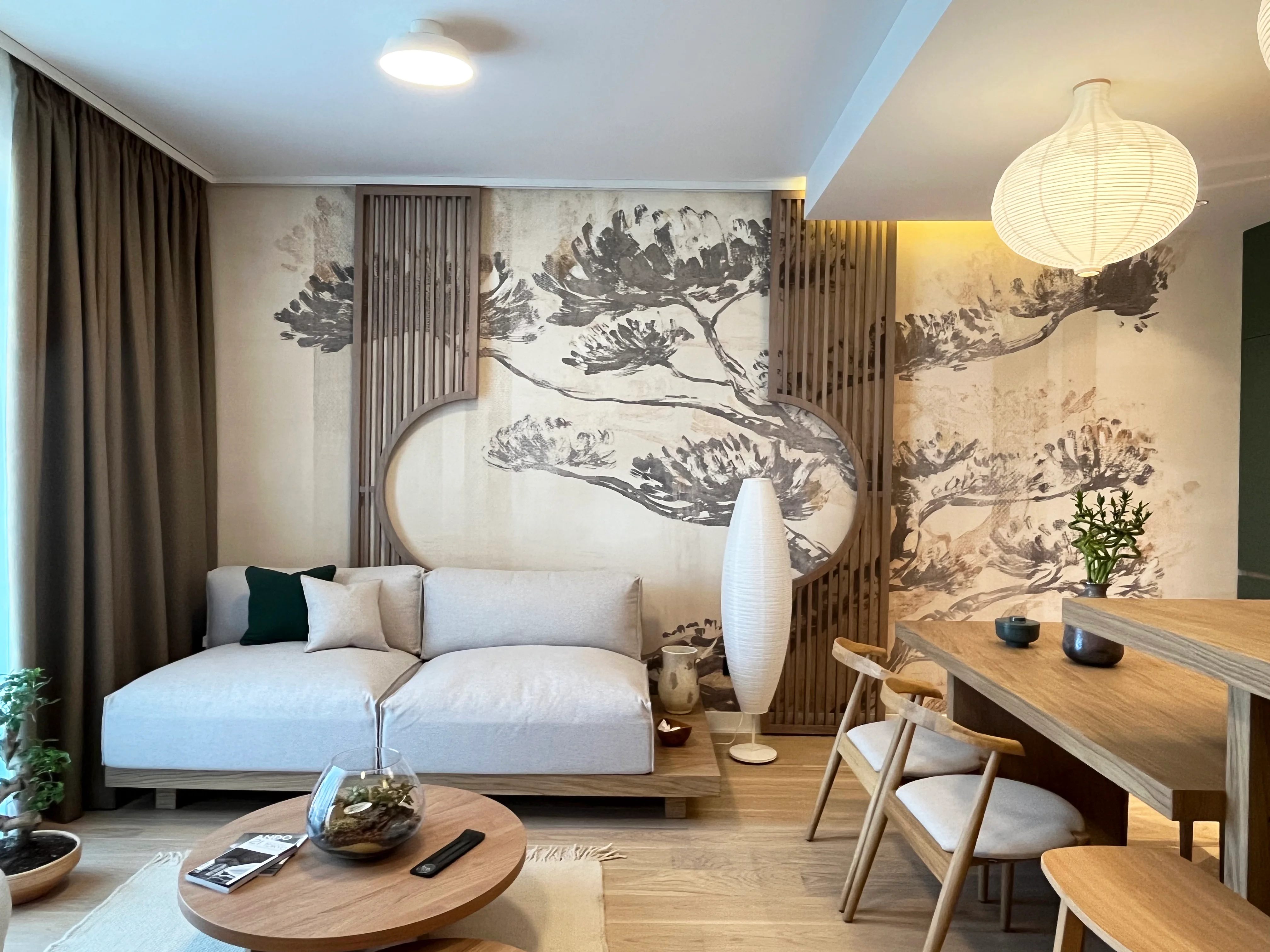
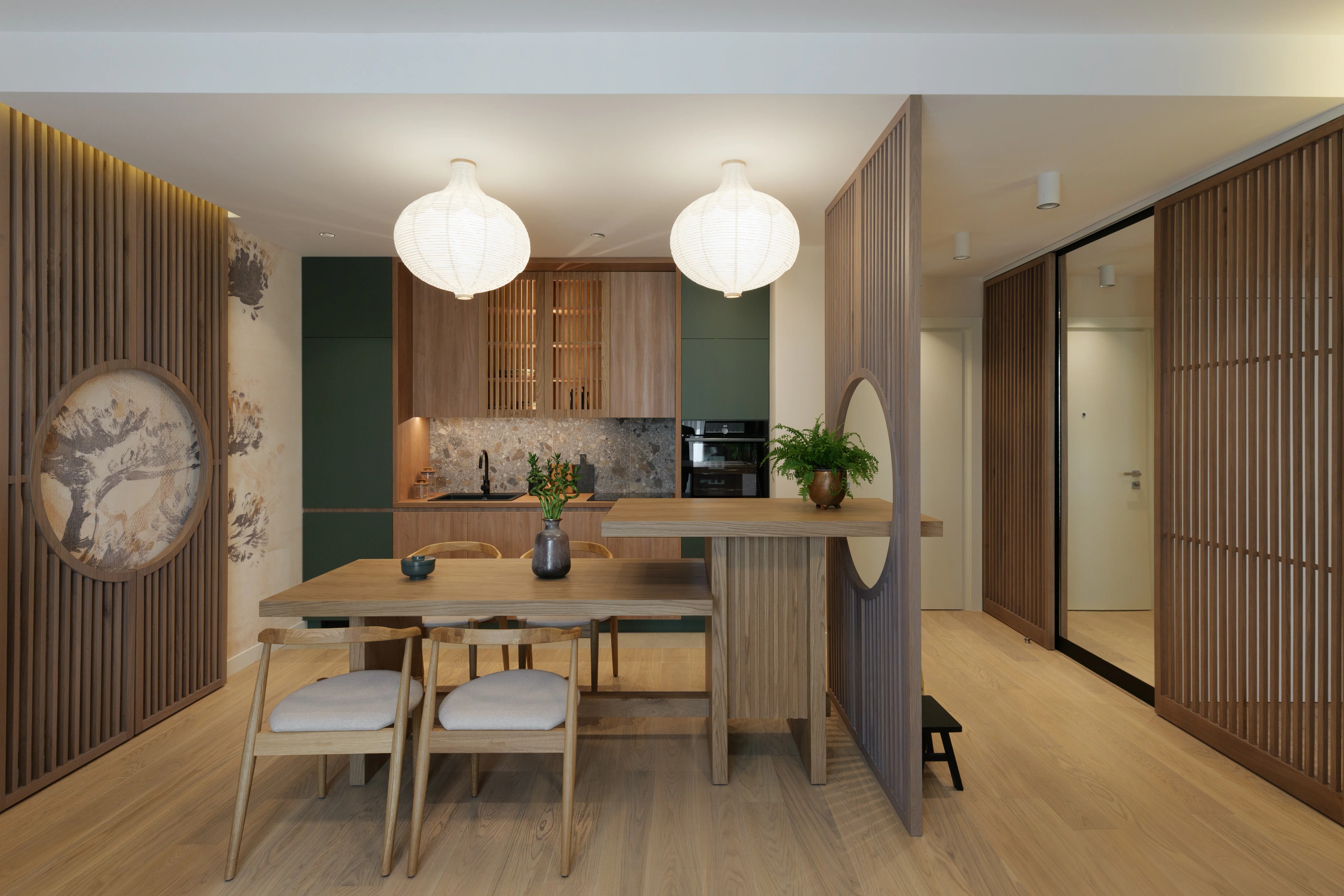
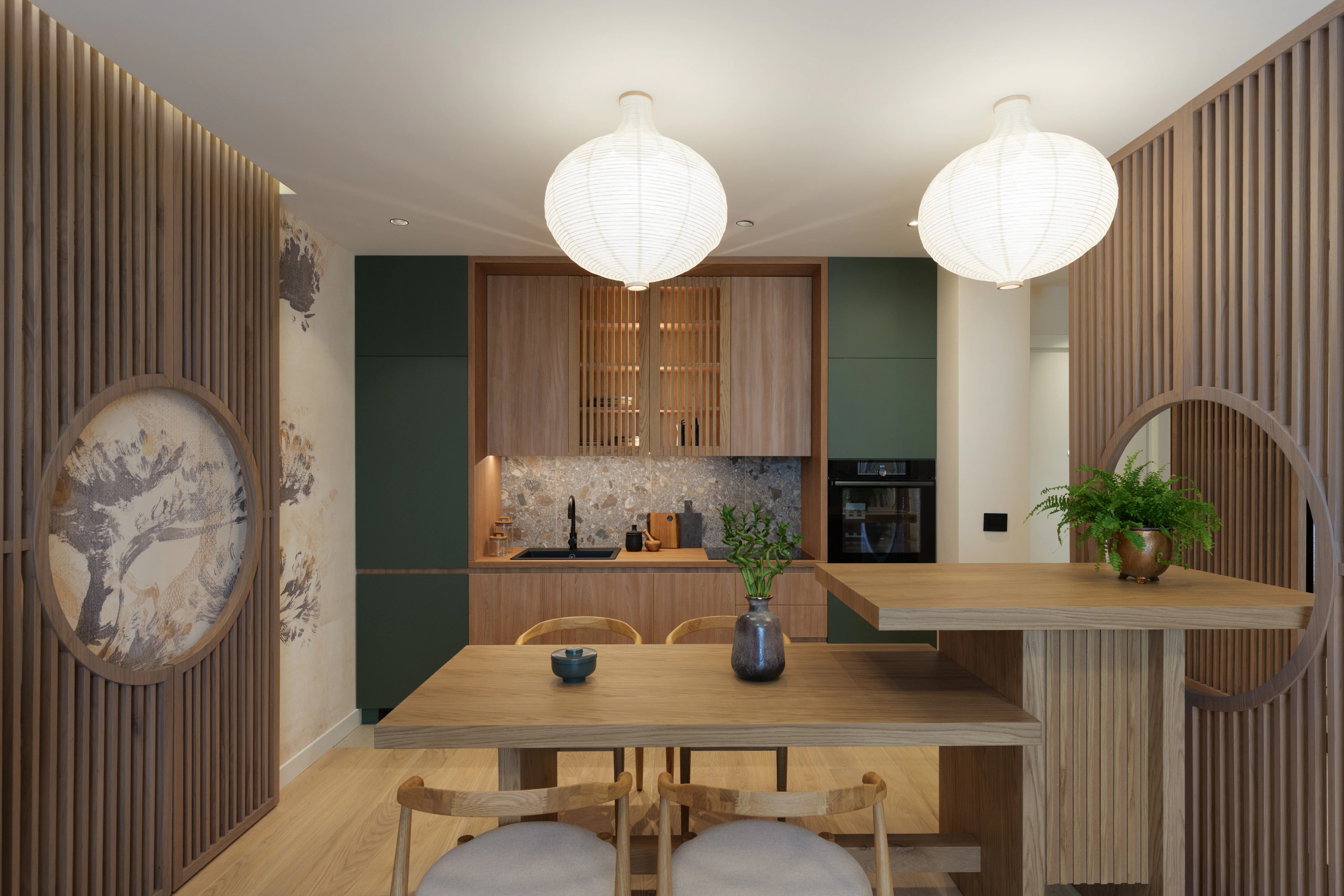
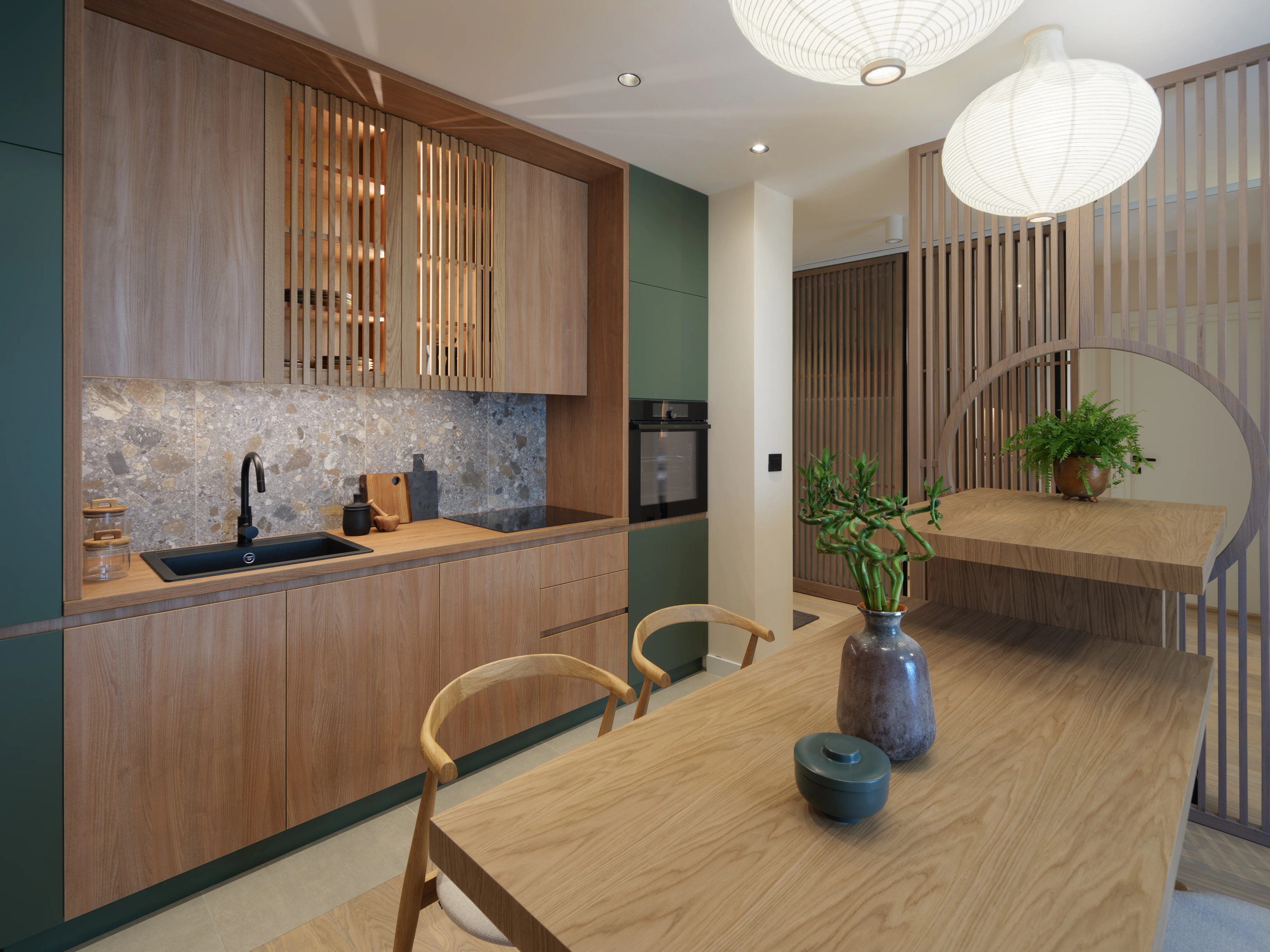
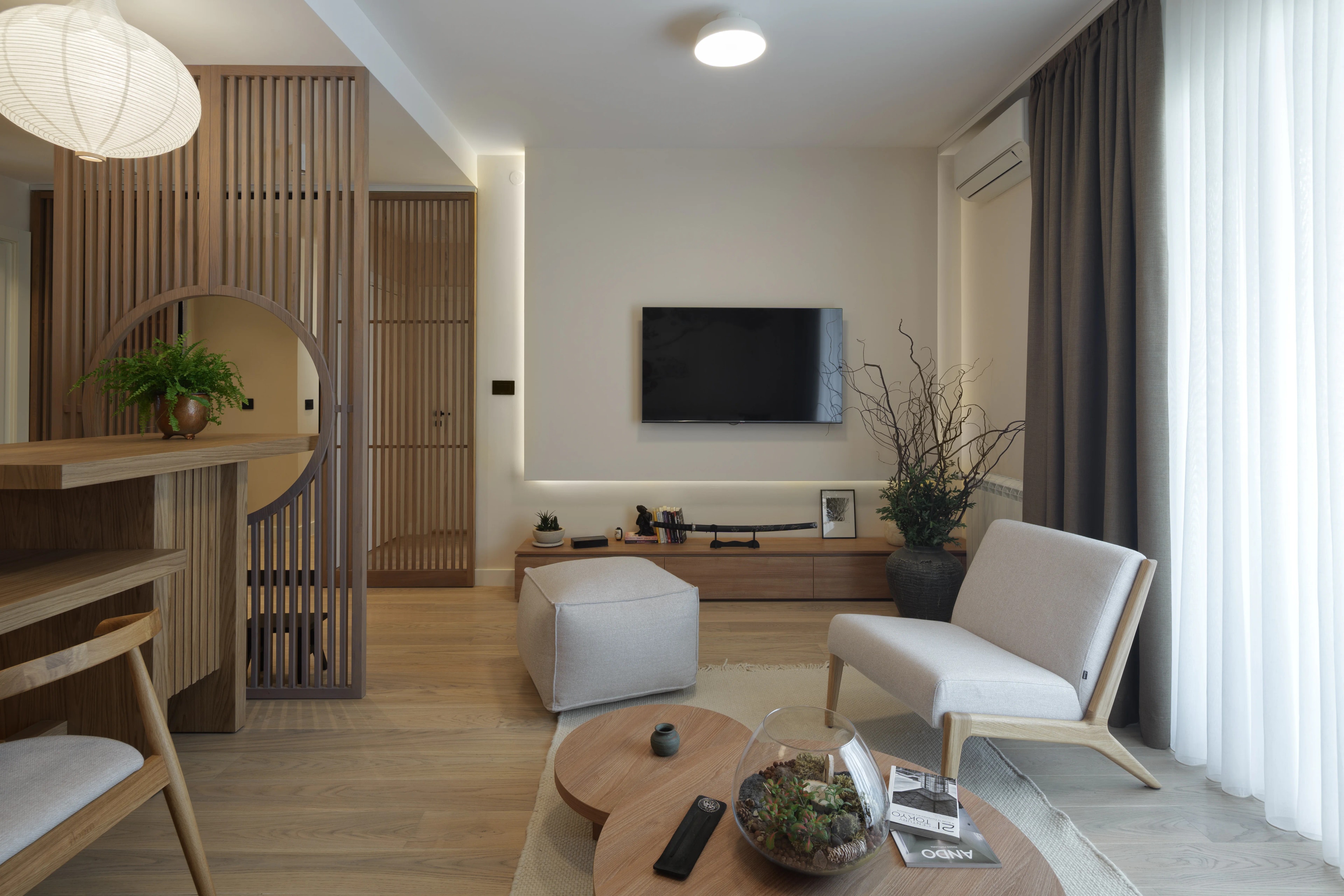
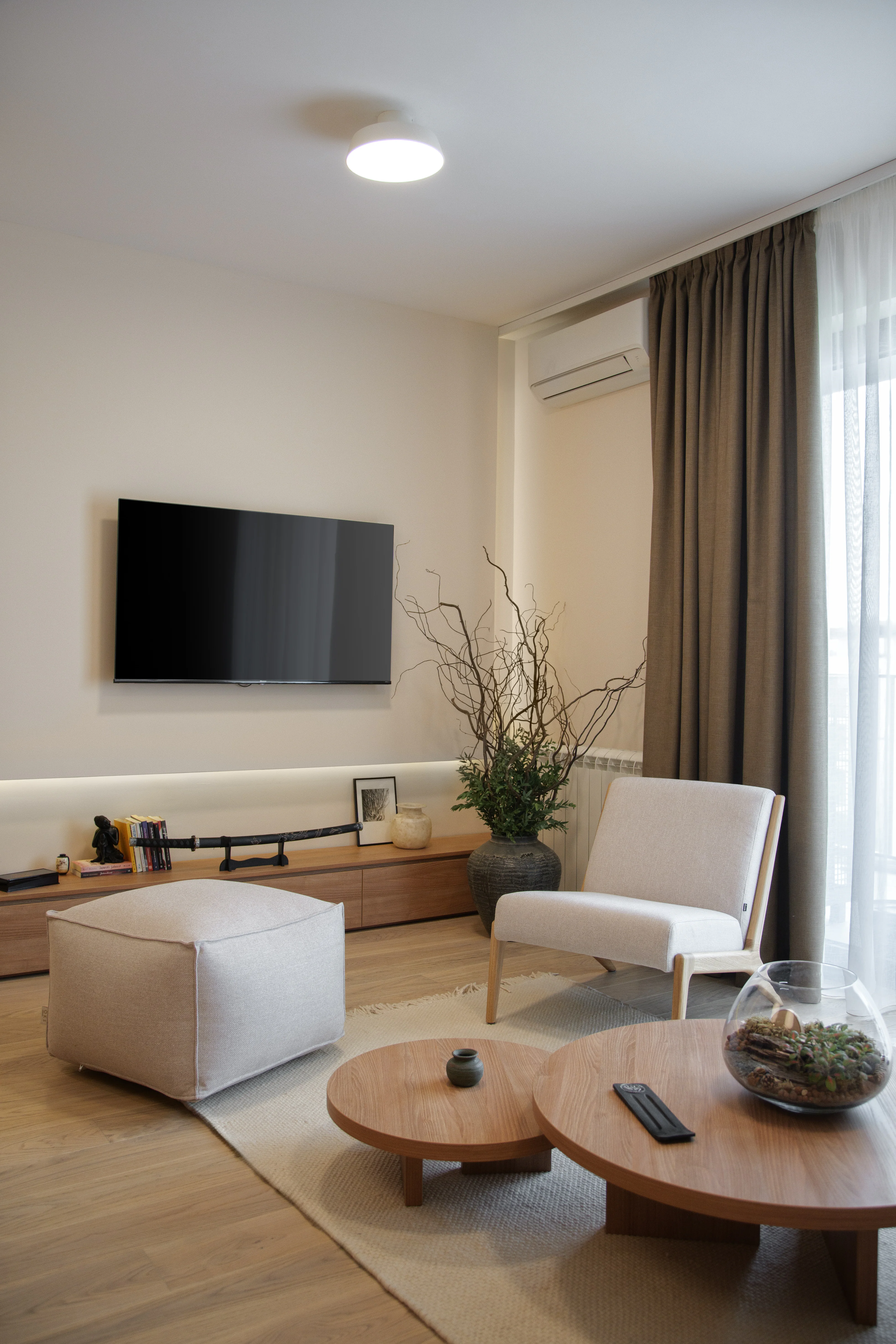
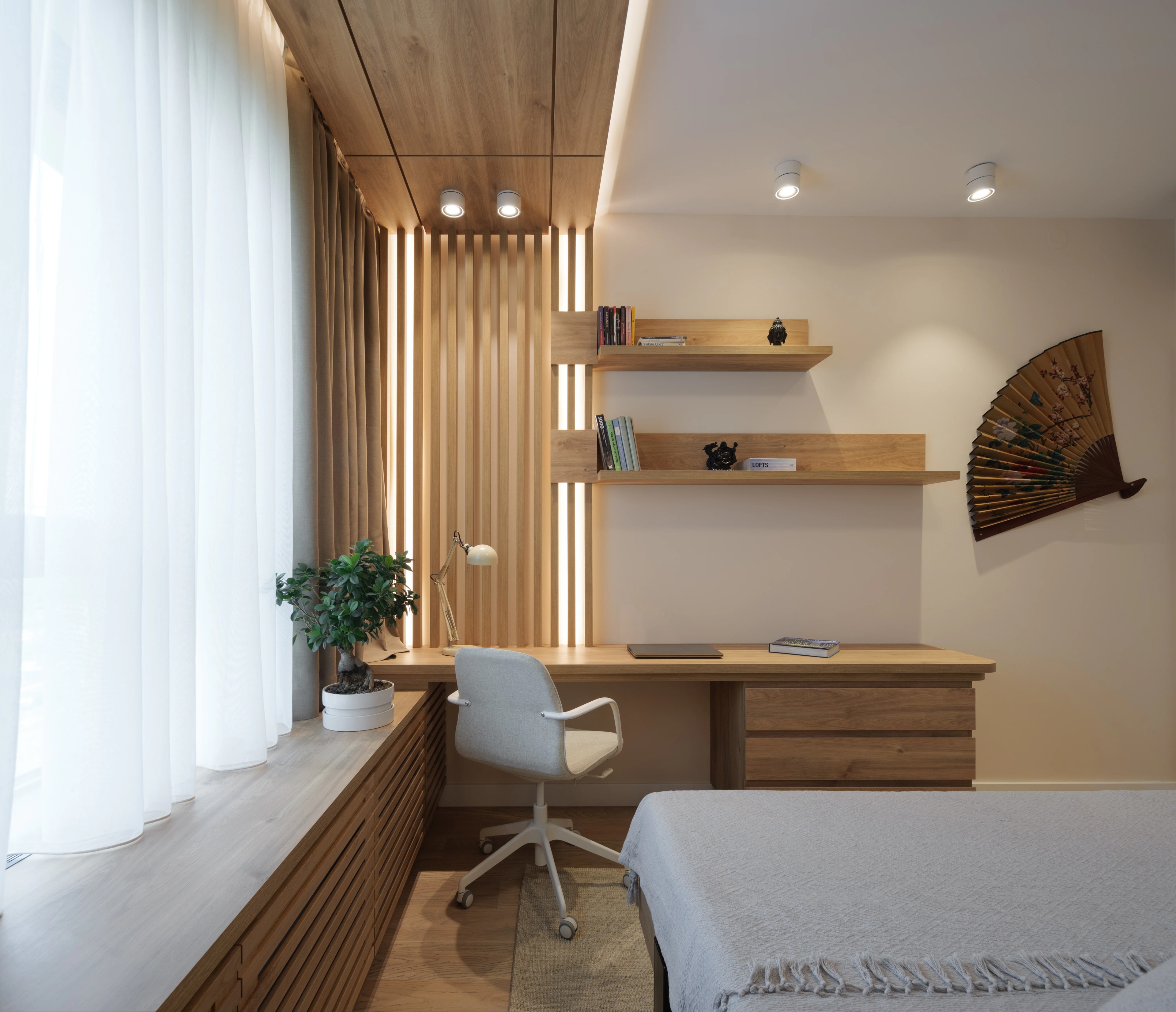
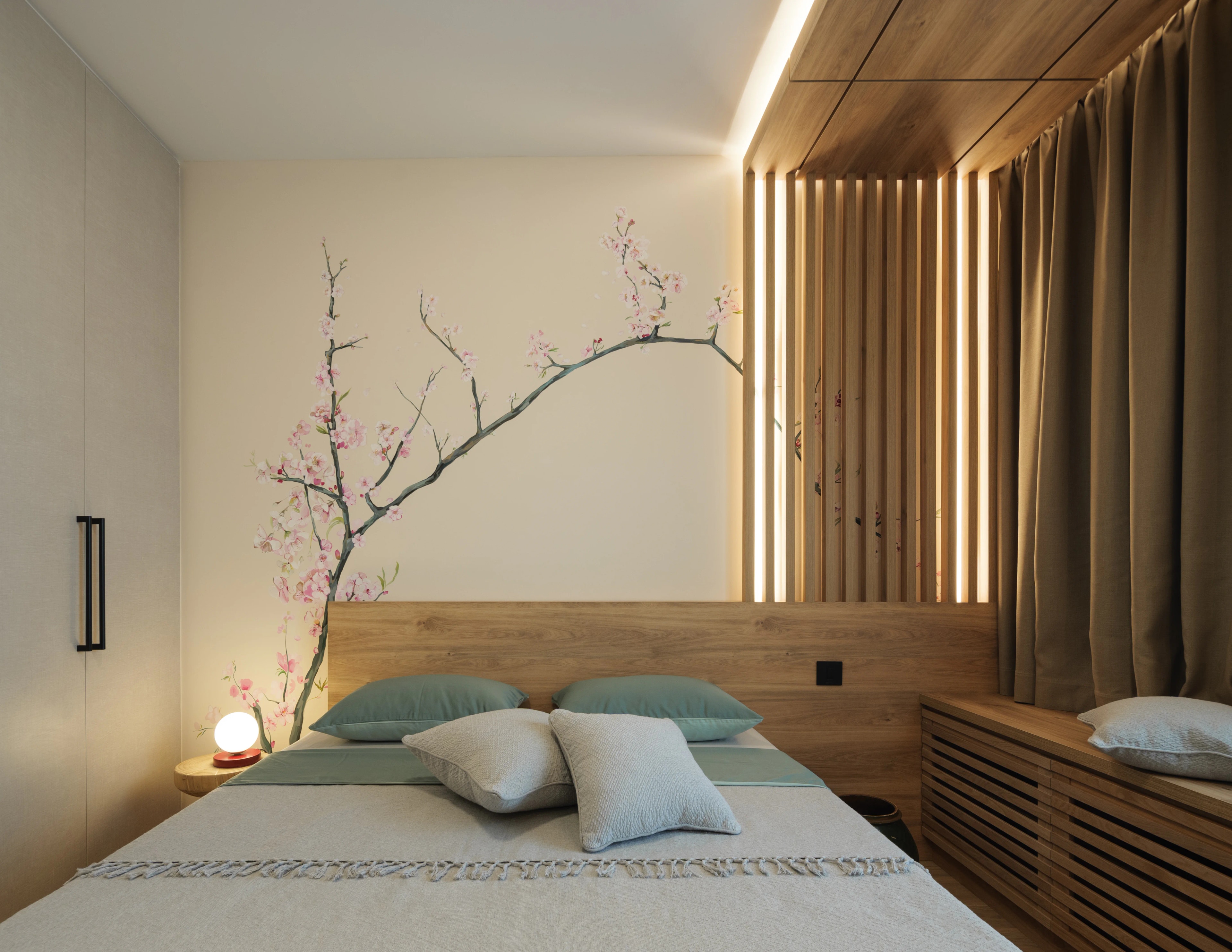
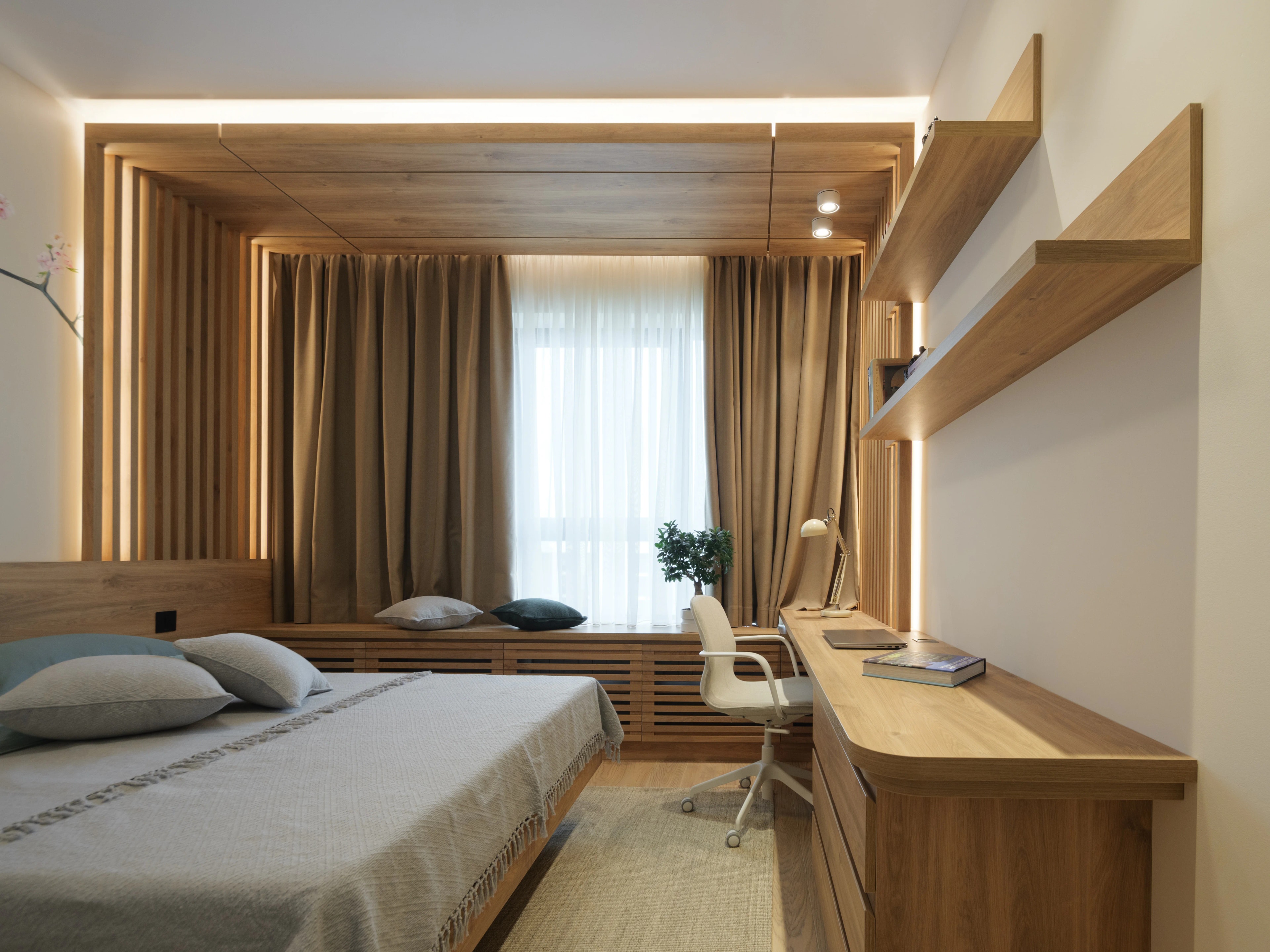
Enterijer sa japanskim motivima inspirisan je životom i radom vlasnika stana na dalekom istoku kao i jakom povezanošću čoveka i prirode. U poslednje vreme veoma je popularna Japandi estetika koja kombinuje japanski i skandinavski stil. Enterijersko rešenje stana imalo je za cilj mešanje kulturnog etosa oba regiona u jednu tehniku. Miran japanski dizajn je zasnovan na jednostavnosti i povezanosti sa prirodom. Odlikuje se minimalnim stilom, čistim linijama i neutralnom paletom boja, te je autoru u enterijeru bio važan zadatak da uskladi boje i materijale. Ključna reč Japandi estetike je "Jednostavno". Ona je kao osnovni postulat vezana za dizajn enterijera i estetiku sa manje ometajućih elemenata. Drugim rečima, japanski dizajn enterijera poštuje pravilo da je manje više, što takođe važi i za skandinavski stil. Japanski dizajn se poziva i na prirodu koja ima bezvremensku lepotu. U enterijeru su korišćene neutralne boje, tako da zidne površine inspirisane prirodom prenose najsvetlije nijanse trešnjinog cveta. Centralni motiv u prostoru je tapet koji na apstraktan način prikazuje drvo trešnje i povezuje čoveka sa prirodom. Ideja zamišljene prirode proistekla je kao rezultat sve manje zelenih površina i čovekovog otuđenja od nje – što je kritika i na situaciju u gradovima Srbije. Sličan motiv prirode se pojavljuje i u spavaćoj sobi gde je iznad uzglavlja iscrtan mural trešnjinog cveta koji zalazi u jednom delu iza zamišljene ograde. Japanska arhitektura je poznata po spoju unutrašnjeg i spoljašnjeg prostora pa su tako u stanu dodati "prozori", pokretni/klizni paravani i vrata od poda do plafona. Na taj način je zamišljena priroda unešena u prostor gde se čovek povezuje sa njom, a kliznim elementima dobija se sveden i pokretan detalj koji menjanjem svoje pozicije stvara novi ambijent u prostoru – pogled kroz pokretan prozor na baštu. U prostoru je integrisan jednostavan nameštaj gde se autor pridržava istih pravila za paletu boja i materijala kako bi stolovi, stolice, sofa... bili u skladu sa završnim obradama enterijera. Izabrani su prirodni materijali – kombinacija drveta, furniranog medijapana čime se postiže estetska harmonija. U Japanu se ukrasi postavljaju simbolično te su detalji u enterijeru svedeni. Najviše je prožeto cveće u vidu ikebana. Od ukrasa su, pored spomenutih panela koji simbolizuju prozor ka prirodi, prisutni i fiksni paneli koji razdvajaju zone u prostoru. Zidna lepeza, kutija za nakit, knjige japanskih pisaca i arhitekata, samurajski mač uvlače posmatrača u prostornu kapsulu i dodatno pojačavaju utisak duha dalekog istoka.